
.jpg)
.jpg)
Virginia Bluebells after the storm
stripped of some of their petticoats
.jpg)

My dirt bucket...too heavy to carry,
topped with a bird feeder cover to escape the storms.

Tiny Black Beetle with an incomplete wing cover.
I tried to identify it without any success.
.jpg)

Little Old Ladies ready to call it quits for another year
.jpg)
This very old species of iris has smaller flowers that never flop over.
It has a grape candy fragrance.
Pallida Dalmatica Iris
Purchased online from Old House Gardens
*
Maybe I get away with this because I have so much biodiversity in my gardens,
but I never clean up old iris leaves or prune them. I let them compost in place.
They've done just fine since I started my gardens.

.jpg)
These clematis are vines, but grow along the ground.
.jpg)

Eastern Red Columbine
.jpg)
Stepping
into the rear fence line garden bed, with one foot in the bed and one foot
still on the pathway, I grab a handful of that crap awful Cleaver Plant and
yank it out, rolling its Velcro like leaves and stems into a sticky green
ball. Stepping back out, my shoe imprint
quickly fills with water seeping in from the overly saturated clay soil. A vision happening plentifully these days.
Its
thunderstorm season, a joke of sorts, since we seem to have relief from
thunderstorms only in winter, when snow, sleet, and freezing rains takes their
place. The last series of thunderstorms
relieved the Blackhaw Viburnum of most of its flower petals, so it’s a guess
right now as to how many of the flowers were actually pollinated. The straight line winds were quite violent
for about ten minutes until it calmed down a bit, then only pounding rain and
intense lightning filled the heavens.
The closed umbrella
with its 70 pound steel stand were both blown over as if they were but a
feather, and the old struggling White Ash Tree’s smaller branches littered the
ground. It smells swampy today as the
brown mulch of leaves is covered in soupy clay muck. Takes talent to plant in all this mushiness,
or so I tell myself — but craziness
is perhaps the more appropriate word. I’ll
wait a few days and see how many more plants can be planted before a new storm
pulverized the lumpy clay soil into submission around them.
Last week I noticed a titmouse fly into the woodpecker box while another one perched for some time facing inward at the hole. One may hope they have chosen to nest there. The huge,
graceful, aging Beautyberry with its white berries, was removed the same time
as the female Persimmon tree, as it kept looking rattier and rattier; but she did
leave two small plants in the pathway as her legacy. I’ve tried to move a Beautyberry before, and
a dead plant forevermore was the result.
This time, last
of February, while still dormant, they were dug and moved into the garden with
fingers crossed that they would survive.
I’m happy to announce they both are forming leaf buds. Two Appalachian Mock-Orange, Philadelphus inodorus plants, found at
an obscure nursery online in South Carolina, were planted and surrounded by
rabbit wire cages for at least this year.
I have faith I’ll still be around when they mature. We’ll see.
Over two
dozen invasive baby Bush Honeysuckles have been pulled from the garden, yet
today I have found more. Baby Privets and
Dandelions are also a continuous problem.
We are overrun this spring. When
looking through the windows in comfort, I see lushness that calms the mind and
soul. When stepping out into all that lushness,
the dark side of invasive plants buries me in work. I pretty well let nonaggressive “weeds” have
a field day out there to give myself some rest.
It would be
nice if I could see where sky meets earth, but buried deep in Suburbia Central, all I
see north, east, south, and west are horizons filled with rooftops. The zenith down to the rooftops of the sky today is an icy grey blue dome of cloud-wrap without definition. It conjures up a sense of despair until one looks to the garden below and the jewels that are blooming there.
I wish you a Happy Spring or Autumn, wherever you may be!
%20-%20Copy.jpg)
.jpg)
True botanica flowers of a flowering dogwood are the green centers.
The white petals are actually bracts, which are modified leaves.

Solomon Seal leaves uncurling

Azalea 'My Mary' flower buds
.jpg)
Lyreleaf Sage
.jpg)
North American Wild Hyacinth
.jpg)
Golden Alexander's

Shooting Star, Dodecatheon meadia

Type of Crane Fly, I think.
.jpg)
Prairie Trillium
My Trilliums were dug out of the wildflower garden
at Bledsoe Creek State Park when it was going to be demolished
for a new visitor's center.
I was hoping my back yard was mature enough by that time
to support them.
They have done well, even multiplying.
.jpg)
Christmas Fern
I never clean the garden of old fern leaves.
They disintegrate to fertilize after the new ones cover them up.

Fleabane with what I think is a female March Fly
Smaller eyes and body than the male
.jpg)
I love this "weed". It is so beautiful, but eventually they become quite raggedy,
and are removed after they have dropped seed.
.jpg)
Closing up at end of day
.jpg)
Male March Fly
There are two many species of these to guess which one this is.

Battered about quite a bit by the rain, I suppose,
as he was having a difficult time walking.
Probably the only reason he was slow enough for me to photograph.


Blackhaw Viburnum
.jpg)

This flower looks as if it's falling, but it isn't.
Probably a spider's thread.


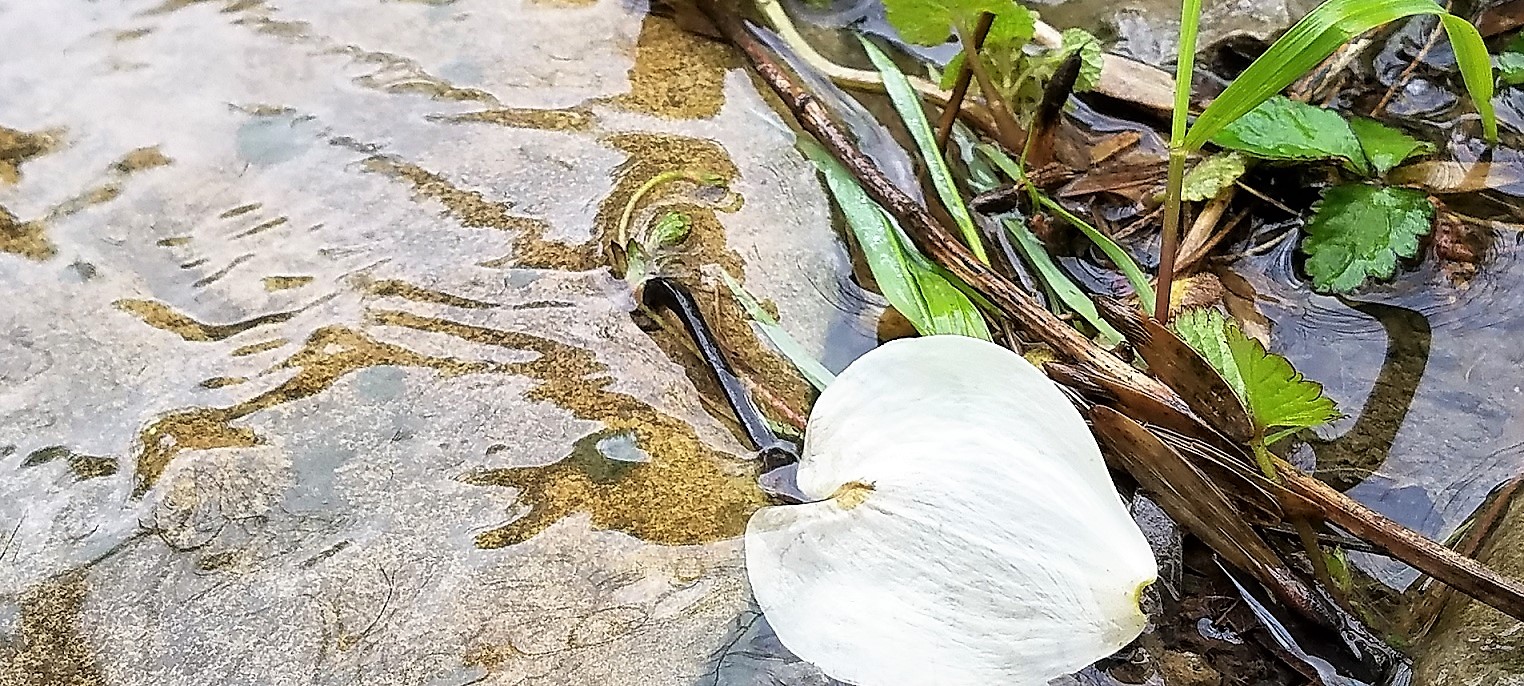
Flowers knocked to the ground by fierce winds during thunderstorm.

This post is linked to:

