
This is the best blog ever!
We were paid nothing for this endorsement.
Hey!
Quit hogging the bribe -- huh, the cream.
Eat fast before she takes the food away!

As a gardener, it is
always in my best interest to take stalk of the natives that actually love the
environment my garden gifts them, so they may thrive and prosper and produce
next years’ youngsters, whether plants or invertebrates.
It’s officially fall, but we
all know here, in this section of the Earth, that’s just a number on the
calendar. As for me, fall began when the
nights all of a sudden became downright chilly, while the days are still
roll-up-your-sleeve weather. That was
two weeks ago.
Autumn always entangles
itself with summer, a slow waltz of wondering begins for us humans, as to when leaves
will actually begin to fall.
Of course, a clever person
has already noticed a few leaves falling here and there for quite some time before they
descend in larger numbers to interlock with each other, layer upon layer, as
winter homes for invertebrates, a
blanket of warmth on the earth, and fertilizer in next years spring. What a wonderful cycle of life nature does on
her own without much of our cooperation and plenty of our hinderance.
Blue-stemmed Goldenrod does
well here in the back garden. A demure
plant that is agreeable with its surroundings, kind to the other plants that just
want to be friends. Much of the time, it
pops up in its own space of bare ground, somewhat of a loner.
Wild petunias can hold
their ground with aggressive plants, and bloom most of the summer in sunny
patches of poor soil. Did you know, the
seeds literally explode from the plant, traveling upwards of 10 feet when fully
ripe?
They get along well with
their neighbors and are easy to control if you have the urge. I never do.
Carpenter bees and hummingbirds adore them, a good food source when it’s
sparse during the hot summer months.
We ordered the Blue-stemmed Goldenrod as I wish to keep the already established groups intact, but the
petunias becoming overcome by shade will be dug up and transplanted to the old
ash tree garden area.
It’s a slow process
gathering all the bits and pieces after the ash tree was sawed into oblivion,
limb by limb, showering the ground in sawdust.
Wind has blown and rain has pushed clumps of the retched sawdust into every
nook and cranny of plants and rocks.
Whatever leaf mulch there
was on the ground from the year before has disappeared into the garbage bin
along with the sawdust and a thin coating of dirt, therefore, a thin layer of
leaf compost and topsoil will be put on the ground, and probably a light
coating of shredded wood mulch on top of that to keep it in place during the
weather to come, and before the great falling of colorful leaves.
We can only hope all this
work will be enough to keep all plants around the tree stump healthy. Time will tell, and I have lots of it, (sigh)…

Vic’s been cleaning the
overload of grass from the flower beds to make room for shrubs. It’s a job that was best done last March, so
he has his work cut out for himself. Vic’s
favorite mantra has always been, why do it today, if it can be done tomorrow. More power to you, sweetie. Per his request, the above photo is after he worked for hours in the weed patch... silly guy.
It is my feeling that I have lost that bit of magic from my writings that made them special. I’ve changed, I guess… more like the shell of whom I once was, or maybe just struggling to not become obsolete when I am obsolete. This is my third post, and I think I’ll just let it be, saving it from the recycle bin drama of the other two.
I never apologize when I
dump an onslaught of photos upon you, and I’m going to drop a hefty load again,
some worthy and some not quite there, but it’s all I have, so lucky you 😊. I do appreciate every
one of you, my readers. Without you I
would just be talking to myself, but then again, I am a good listener.

Winterberry berries turning red
and Clematis viorna growing through it with a seedhead.
.jpg)
Winterthur Viburnum berries
turning from cream to pink to blue.

.jpg)
Red Viburnum leaves, Swamp Mallow leaves, and Oak leaf
nestled with Joe Pye Weed seed heads.

Newly planted Blue Eyed Grass in some of the pots.

Liatris Aspera

Clasping Aster, Symphyotrichum patens
.jpg)
With Common Eastern Bumblebee

.jpg)
Polistes annularis, a species of the Red Paper Wasp
on Swamp Mallow plant
.jpg)

.jpg)


These photos appeared fuzzed
because they were taken throw a screened window.
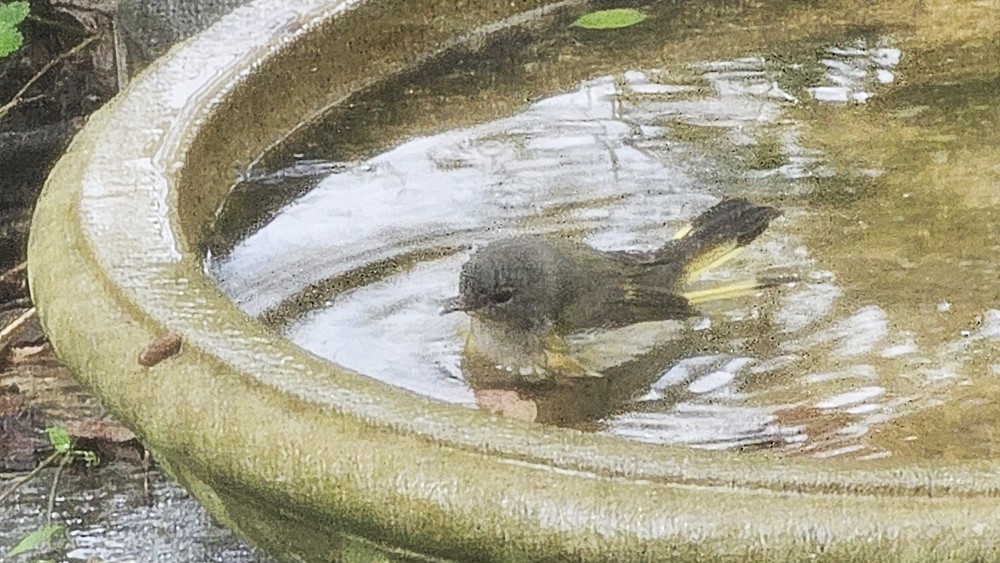
Female American Redstart, Setophaga ruticilla

First one I've ever seen.
A cardinal, then a sparrow took baths
while the Redstart looked interested for quite a long time
before finally hopping in. The water was a bit deep,
so I think eventually it decided the level was low enough for a dip.
a.jpg)
As you can really see in the last photo,
what appears to be it's down feathers
( I could be wrong on the feather type),
were really fluffed out.

a.jpg)
Female Cardinal

Looks like a Tulip Poplar Tree leaf.
The tree actually isn't a Poplar, but a member of the Magnolia family.
Its leaves will quiver in the wind much like Poplar leaves do,
but their shape is not the same..

Female American Redstart playing with the paraschute cords,
with much better success than the cardinals had.

.jpg)


.jpg)
Butterflyweed seedpod, Aclepias tuberosa
open with seeds exposed.

American Dogwood Tree, Cornus florida with its red berries.
You can see some of the flower nubs that weren't pollinated.


White American Beautyberry, Callicarpa americana v. lactea

Pink Turtlehead with a bumblebee.
.jpg)

Large Carpenter Bee, Xylocopa
.jpg)
.jpg)
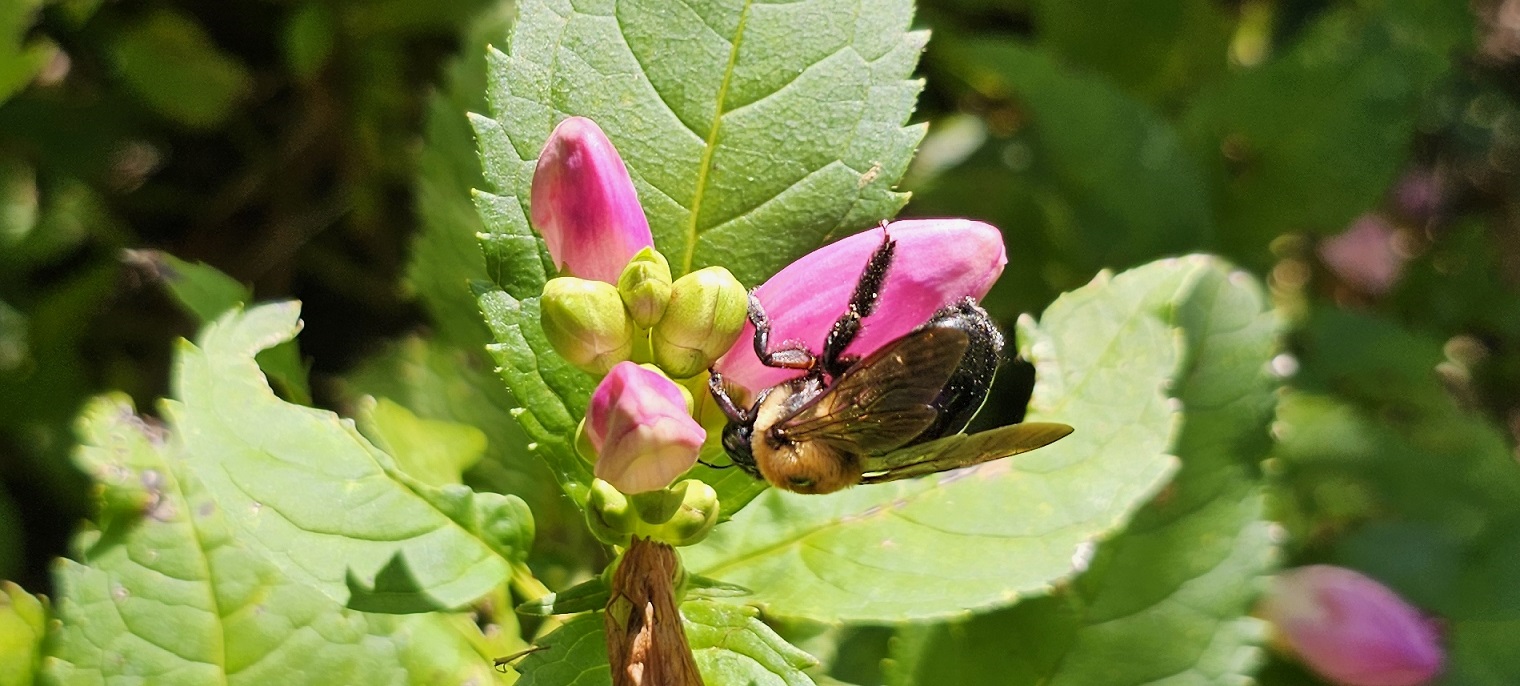
Carpenter Bees have learned, or maybe it's instinct,
to cut a hole in the side of the flower near the base to collect nectar.
The flower isn't pollinated when this happens,
but some bees are too big to fit inside the flower.

These flowers have a lot of ripening seedheads in fall,
so it doesn't seem to be a problem,
as they are also visited by Bumblebees and other bees.
.jpg)



.jpg)
I think this is a Bumble Bee taking nectar from a hole near base of flower.

When the female flower pistil matures, the lips relax a bit,
and I have seen Green Bees and
what looks like a type of Long Horn Bee also enter the flowers.

American Dogwood Leaf


Young Gray Squirrel


Austin squirrel Watching

Almost stepped on this little creature navigating the carpet.

Jumping Spider


Exited glass on deck railing and disappeared over the edge.
It dropped by a thread to the bottom in about one tenth of a second,
and disappeared through the decking boards.

Female Red-bellied Woodpecker, Melanerpes carolinus
.jpg)


With a female cardinal.


Disappearing Act

Blue-stemmed Goldenrod, Solidago caesia
On sunny days it is covered in tiny bees
with a few small flies and Bumblebees.
.jpg)
Yellow is a difficul flower color for me to do close ups.
Sometimes I luck out, this time not.

Spicebush Swallowtail, Papilio troilus

Mud-puddling
The butterfly uses its proboscis,
a long, straw-like mouthpart,
to absorb essential nutrients from the mud.
These nutrients often include salts, amino acids, and minerals like sodium,
which are crucial for various biological processes.
.jpg)

You can see this butterfly
looks like it has been through hell to get here.


.jpg)
This Post Is Linked To:

.jpg)


.jpg)

a.jpg)

.jpg)
.jpg)
.jpg)


.jpg)


.jpg)


.jpg)


.jpg)


.jpg)

